
Corn snake: lifespan, size, diet and care
It’s an escape artist: a locking lid and no gaps at all.
Take the quiz: is it right for you?
How big it is
An adult is up to 182 cm (72 in) long.
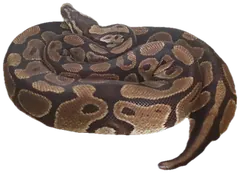
Snakes are measured in length: the orange bar is their true length, next to the man. The photos (coiled) aren’t to scale.

Before it arrives
- A vivarium at least as long as the snake and a third as wide and high (for 150 cm: 150 × 50 × 50 cm, about 60 × 20 × 20 in), with a locking lid: it's an escape artist
- A guarded heat lamp with a thermostat (basking 28–30 °C / 82–86 °F, cool end 20–24 °C / 68–75 °F) and two thermometers
- At least two hides, one at each end, plus a humid one, and a branch to climb
- A water bowl it can fully soak in (shallow for babies, about 1 inch)
- Floor: soil with some sand and leaves, or paper or reptile carpet; never cedar, wood shavings, corncob or gravel
- A low-output UVB tube (2–7%) and a timer for 12 hours of light
- Frozen mice of the right size and tongs; never leave a live rodent alone with the snake
- Run the vivarium for a week first; after it arrives, leave it alone for 1 to 2 weeks
Its home: temperature and light
- Basking spot
- 28–32 °C (82–90 °F)
- Cool side
- 20–24 °C (68–75 °F)
- At night
- 16–20 °C (61–68 °F)
- Humidity
- 40–50%
- Light
- 12 hours a day
- UVB lamp
- helpful, not required
What it eats and how often
thawed frozen prey, every 7–14 days as an adult
- Babies: every 5–6 days
- Juveniles: every 5–7 days
- Adults: every 7–14 days
One frozen-thawed mouse of the right size, slightly wider than the widest part of its body: a newborn pinkie when small, then bigger as it grows. Now and then a quail or a rat for variety. Offer food with tongs and don't handle it for 48 hours after a meal.
Vaccines and checkups
None: reptiles don't need vaccines.
A checkup at the vet every year. With a reptile vet.
The care calendar
What to do, from the most frequent to the least.
- every dayCheck the temperaturesWith two digital thermometers, one at the warm spot and one at the cool end: thermostats can be off.
- every 10 daysFrozen-thawed preyPrey slightly wider than the widest part of its body. Hatchlings eat every 5–6 days, adults every 7–14.
- every monthFull clean of the terrariumRemove droppings as you see them; fresh water every day.
- every yearYearly check-upWith a reptile vet.
Call the vet right away if…
If you see one of these signs, call your vet now: don’t wait for it to pass.
- Breathes with its mouth open, wheezes, or has bubbles or mucus at the nose or mouth
- Old skin left over the eyes or in rings after a shed, especially on the tail tip
- Brings up its meals, or refuses food and loses weight
- Thick, cheesy material in the mouth, or red or bleeding gums
- Tiny black specks on its body or around the water bowl, or it soaks for hours
Frequently asked questions
How long does a corn snake live?
Usually 10–20 years.
How big is a corn snake?
An adult is up to 182 cm (72 in) long.
How much does a corn snake weigh?
We have no adult weight for this pet from a vet source: what matters is that its weight stays steady.
What does a corn snake eat, and how often?
Thawed frozen prey, every 7–14 days as an adult. One frozen-thawed mouse of the right size, slightly wider than the widest part of its body: a newborn pinkie when small, then bigger as it grows. Now and then a quail or a rat for variety. Offer food with tongs and don't handle it for 48 hours after a meal. Babies: every 5–6 days; juveniles: every 5–7 days; adults: every 7–14 days.
Does a corn snake need vaccines?
None: reptiles don't need vaccines.
When should a corn snake see a vet right away?
Right away if you see one of these signs: breathes with its mouth open, wheezes, or has bubbles or mucus at the nose or mouth; old skin left over the eyes or in rings after a shed, especially on the tail tip; brings up its meals, or refuses food and loses weight. The others are above, in “Call the vet right away if…”.
How old is a corn snake in human years?
There’s no serious human-years chart for a corn snake: the ones online don’t cite sources. What counts is where it is in its life: its senior years start at about 7.5 to 15 years old.
Tools for your corn snake
Always ask your vet: this site helps you understand, it doesn’t replace a checkup.
Sources
- RSPCA, Corn snake care (checked on September 30, 2026)
- Merck Veterinary Manual, Table: Important Husbandry Requirements for Selected Reptiles (checked on September 30, 2026)
- Association of Reptile and Amphibian Veterinarians (ARAV), Corn Snakes, Companion Reptile Care Series (PDF, copy on a veterinary clinic website) (checked on October 13, 2026)
- Merck Veterinary Manual, Routine Health Care of Reptiles (checked on October 14, 2026)
- Merck Veterinary Manual, Viral Diseases of Reptiles (checked on October 14, 2026)
- Merck Veterinary Manual, Disorders and Diseases of Reptiles (checked on October 14, 2026)
- Smithsonian’s National Zoo, eastern corn snake (checked on October 13, 2026)